What Is Your Water Line Doing?
Tap what you see. We will tell you how urgent it is and what to do next.
Whose Water Line Is It? SAWS or You?
Pick where the water or the problem shows up. We will tell you who to call first and what to do right now. This is a general guide, not a legal ruling. SAWS says it maintains the line from the main to the meter, and the property owner handles repairs from the meter toward the home.
Ownership can differ for some properties, such as shared lines, private mains or unusual meter locations. SAWS or a licensed plumber can confirm yours.
What Water Line Repair Covers (and What It Does Not)
A water service line is the pressurized pipe that carries drinking water from the SAWS meter to your house, and water line repair means fixing or replacing that pipe, not your sewer or drain pipes. It is the buried pipe in your front yard, under the driveway or along the side of the house, ending at your main shut-off valve. If it leaks, breaks or corrodes, you lose pressure, waste water and pay for it.
This page is about water line repair in San Antonio for the standard, plan-it-this-week kind of job: finding the leak, deciding between a spot repair and a new line, and getting it done right. If water is already flooding your yard or house, jump to the urgent first steps below, then call (210) 898-9754 for emergency help. Our emergency main water line repair page covers the after-hours, active-flood side.
Three pipes people mix up
| Pipe | What it carries | Where to read about it |
|---|---|---|
| Water service line (this page) | Clean, pressurized water from the meter to the house | You are here |
| Sewer or drain line | Wastewater leaving the house by gravity | Sewer line repair |
| Piping inside the walls | Hot and cold branches to every fixture | Whole-house repiping |
The terms "main water line," "water service line," "supply line" and "yard line" are often used for the same pipe. Plumbers and SAWS may use them a little differently, which is why we explain who owns which part later on this page.
Leak Suspected? Do These Steps Right Now
If you suspect a broken water supply line, shut off your main valve, keep everyone away from wet or sinking ground, and call a licensed plumber. Acting in the first few minutes limits water damage, wasted water and a bigger bill.
- Shut off the main at the house. Turn the valve clockwise (or the lever a quarter turn) until it stops. If it will not close, call us right away. Do not force a stuck valve with a pipe wrench cheater bar.
- Open one faucet low in the house. This bleeds off pressure so less water escapes outside.
- Protect the electrical side. If water is near outlets, a panel or an appliance, stay out of the water and switch off power only if you can reach the breaker while dry.
- Smell gas? Leave. Go outside, call 911 and CPS Energy from a safe distance, and do not use switches or flames. Then call us.
- Do not dig. Buried gas, electric, cable and other lines may run close to your water line. Texas811 locating is free for the utilities it covers and must be done before digging.
- Take photos and a meter reading. Photograph the wet area and the meter display. Text them to (210) 898-9754 to speed up the diagnosis.
- Call the right party. Water before the meter: SAWS at 210-704-SAWS (7297). Water after the meter or inside: call us.
Need a human right now? ☎ Call (210) 898-9754 for emergency help.
Signs of a Damaged Water Supply Line
The most common signs of a damaged water service line are a wet or sunken spot in the yard, a bill that jumps with no change in use, a meter that moves when everything is off, and sudden low pressure. A leaking underground water pipe rarely announces itself with a geyser. It usually hides until you notice something odd.
In the yard
- Soggy, green or mushy patch when it has not rained
- Pooling water along the path from meter to house
- Sunken ground, cracked pavers or a dip in the driveway
- Hissing sound near the meter or the hose bib
- Water visibly bubbling up in the meter box
In the house
- Pressure drops at every faucet at once
- Brown, rusty or cloudy water, especially at first draw
- Water hammer (banging) or sputtering faucets
- Damp spots at the front wall where the line enters
- Foundation-side dampness or musty smell near the entry point
Why is water pooling in my yard?
Water pooling in your yard with no rain or sprinkler run can mean a leaking underground water pipe, but it can also be irrigation, a hose bib, a sewer cleanout overflow or runoff. A wet spot that stays damp for days, smells clean (not sewage) and sits along the line from the meter to the house is the classic pattern for a water service line leak. Wet spots with a foul smell point to a sewer problem instead. Pair the wet-spot test with the meter test below to confirm.
The clearest sign is on paper. Look at your last three SAWS bills. A steady climb in gallons, with no new guests, pool fills or irrigation changes, deserves a leak check. SAWS notes that many leaks show up in its meter data as continuous hourly use, so check your account for a steady overnight flow.
How to Find Your Main Shut-Off and Water Meter
Your water meter usually sits in a concrete or plastic box near the street or sidewalk, and your main shut-off valve is usually where the line enters the house or at the meter. Knowing both before a leak happens can save hours of damage.
Where to look
- Meter box: A ground-level lid, often marked "WATER," near the curb, front property line or alley. Lift it with a screwdriver or a meter key and watch for insects, snakes or standing water.
- Main shut-off at the house: Often on the front wall of the house, in the garage, inside a utility closet, or near the water heater. Many San Antonio homes have a ball valve or an older gate valve with a round handle.
- Valve at the meter: Many meters have a curb stop or shut-off valve on the customer side. It may be hard to turn and is not meant for routine use. Valves in meter boxes belong to SAWS to adjust in many situations, so use your house main first.
The meter leak-indicator test
- Turn everything off. Close all faucets, stop the dishwasher and washer, pause the ice maker and sprinklers, and make sure no toilet is running.
- Read the meter. SAWS meters are electronic. Tap the optical button to move through screens, and look at the flow rate or leak indicator. Flow rate should read zeros when no water is in use.
- Wait 15 to 30 minutes. Do not use any water, then look again. If the reading changes or the flow indicator shows movement, water is escaping.
- Close your house main and check again. If the meter stops, the leak is inside your house or on the home side of the main. If the meter keeps moving with the main closed, the leak is between the meter and the valve (or on the SAWS side), so call us or SAWS.
SAWS publishes meter-reading help and leak guidance at saws.org. Check there for what your specific meter display shows. Toilet leaks are the most common false alarm, so a quick look at toilet repair basics can save a service call.
Who Owns the Water Line in San Antonio: SAWS or You?
In San Antonio, SAWS says it is responsible for maintaining the water line from the main to the water meter, and the property owner generally handles repairs from the meter toward the home. That is how SAWS describes it on its own customer page, and it matches how most Texas utilities divide responsibility. This section is general information. Your property may differ, and SAWS can confirm.
| Part of the system | Who normally handles it | Who to call first |
|---|---|---|
| Water main in the street | SAWS | SAWS, 210-704-SAWS (7297) |
| Line from main to meter | SAWS | SAWS |
| The meter itself | SAWS | SAWS |
| Service line, meter to house | Homeowner (generally) | A licensed plumber |
| House main valve and PRV | Homeowner | A licensed plumber |
| Irrigation lines, hose bibs, yard lines | Homeowner | A licensed plumber or irrigator |
The owner-side line is often 30 to 100 feet long in San Antonio, depending on lot depth and setback. A leak anywhere along that length is the homeowner's to fix, which is why finding the exact spot matters. Our water leak detection service pinpoints it so you do not pay to dig the whole yard.
Leaky meter or a meter that will not shut off?
If water leaks at the meter body or from the box, that is the SAWS side. Report it. If a meter's shut-off will not hold, that is also a SAWS question. Do not tamper with the meter, since tampering can be an offense and can cause bigger leaks. Use the helper above if you are not sure.
Not sure which side your leak is on? ☎ Call (210) 898-9754 and we will walk through it.
High Water Bill and SAWS Leak Adjustments
If a leak drove up your SAWS bill, fix it promptly, keep the repair receipt, and ask SAWS whether your account qualifies for a leak adjustment. SAWS says it can review your account for a possible adjustment after you submit repair receipts. Adjustment rules change, so confirm the current terms at saws.org or by calling 210-704-SAWS (7297). We cannot promise a credit.
- Keep the repair invoice. Our written invoice lists what we found and fixed, with the date and location.
- Take before and after photos. They help if SAWS asks questions.
- Watch your usage online. SAWS offers account and meter data tools. A flat, steady hourly line overnight often means a leak.
- Do not wait. The longer a leak runs, the more it can cost and the less room you have to dispute anything.
Heavy summer use can also raise a bill without any leak, especially with irrigation. A sprinkler zone that sticks open looks like a leak on the meter. See our outdoor plumbing page for hose bibs, yard lines and irrigation tie-ins.
Main and Underground Water Line Repairs
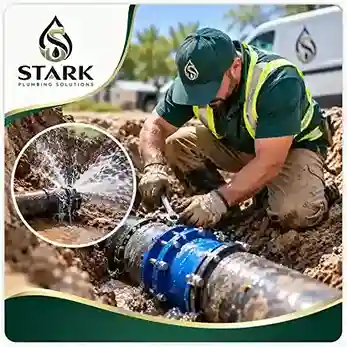
Underground water line repair means locating the break, exposing or reaching the pipe, cutting out the damaged section, installing new pipe and fittings, then testing and restoring the area. The main water line repair that people usually mean is the service line from the meter to the house.
Who repairs an underground water service line?
A licensed plumber repairs an underground water service line on the customer side of the meter. In San Antonio, SAWS handles the main in the street, the line to the meter and the meter itself, while the homeowner hires a licensed plumber for the line from the meter to the home. Texas requires plumbing work to be done by licensed plumbers, and you can look up a license at tsbpe.texas.gov. Utility, irrigation or general contractors without a plumbing license generally should not be doing this work.
Common repair types
Fix one section
- Best for a single pinhole, a cracked fitting or one damaged section
- Smaller excavation
- Pipe nearby should be inspected before you decide it is enough
Connection repairs
- Leaks at the meter-side connection, the house main or the transition to house piping
- Often paired with a new shut-off valve
- May involve a new PRV
Long section or entire line
- Multiple leaks or brittle pipe
- Poly, galvanized or old copper nearing end of life
- Roots, soil movement or crushed pipe
A leak often is a symptom of a line that is wearing out. The fix is only as good as the pipe next to it, which is why we check the surrounding pipe, not just the hole. For a sudden break or active flood, see burst pipe repair and emergency main water line repair.
Leak Detection and Pipe Diagnosis
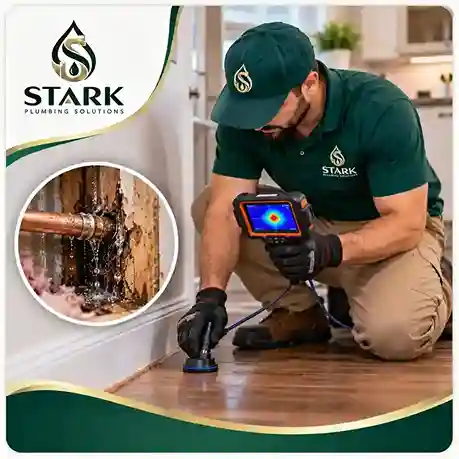
Leak detection finds where the pipe is leaking before any digging, using meter tests, pressure tests and listening or tracing equipment. A good diagnosis can turn a yard-wide dig into one small hole.
- Meter and pressure test. We isolate the line and see whether it holds pressure. A drop tells us the line is leaking, and the rate tells us how big.
- Pipe tracing. We trace the route of the line so the leak search and any digging follow the actual pipe, not a guess.
- Acoustic or equipment-based pinpointing. Methods vary by site and pipe material. We explain what we use and why when we are on site.
- Review of the pipe condition. Material, age and how many repairs it already has decide whether a spot fix makes sense.
- Options and written estimate. You get the findings in plain language and a written estimate before any work begins.
Leaks under the foundation are a different job. If your meter test shows a leak but the yard line is dry, see slab leak repair.
Water Line Materials: What Your Pipe Is Made Of
The most common water service line materials are copper, PEX, polyethylene or HDPE, PVC and CPVC, galvanized steel, and polybutylene, and each has trade-offs for buried use. The right choice depends on soil, code, the line length and the plumber's inspection.
| Material | Pros | Cons |
|---|---|---|
| Copper | Long track record, strong, handles heat and pressure | Can pinhole in aggressive water or soil, higher material cost, theft risk on exposed pipe |
| PEX | Flexible, fewer joints, resists freeze splitting better than rigid pipe | Must be rated and approved for underground use, not for sunlight exposure, check local code |
| Polyethylene / HDPE | Flexible, long coils with few joints, suited to trenchless methods | Needs correct fittings and bedding, code approval varies by use |
| PVC / CPVC | Low cost, corrosion-resistant | Rigid and can crack with soil movement or impact, check local code and pressure rating |
| Galvanized steel | Common in older homes | Rusts from the inside, restricts flow, leaks at threads, usually at end of life |
| Polybutylene (gray poly) | Used in homes from roughly 1978 to 1995 | Known for failures at fittings, often replaced when found |
We will tell you what we find and what we recommend. Approved materials differ by use and by the code in force, so we confirm what is permitted before ordering pipe. If the older pipe inside the house is also galvanized or polybutylene, the question of a bigger project comes up. That is a whole-house repiping topic, and we will say so honestly rather than sell it to you.
Water Line Replacement Methods
A water service line can be replaced by open-trench digging, pipe bursting, directional boring or other trenchless methods, and the best choice is made for each site after inspection. We explain the options for your property, and we do not promise one method before seeing it.
| Method | How it works | Good fit when | Watch-outs |
|---|---|---|---|
| Open trench | Dig along the line, remove old pipe, lay new pipe | Short runs, simple lawn, shallow depth, repairs needing full visual access | Most surface disturbance |
| Pipe bursting | A tool pulls new pipe through the path of the old, breaking the old pipe outward | Old pipe that follows a usable path | Needs entry and exit pits, other utilities nearby must be located |
| Directional boring | A drill bores a new path and new pipe is pulled in | Crossing driveways, walks or landscaping | Needs space for equipment, rock or caliche can complicate it |
| Pull-through or slip-lining of short sections | New pipe pulled through an existing sleeve or conduit | When a sleeve or conduit already exists | Not available for every site |
Can a water line be replaced without disturbing the entire yard?
Often, yes. A water line can sometimes be replaced without digging up the whole yard by using trenchless methods that need only a few small access pits. Whether that works depends on the route, soil, depth, other buried utilities and the condition of the old pipe. Rock and caliche can limit some trenchless options. We inspect first, explain which methods could work on your property, and put the plan in writing. We do not promise a particular method or landscaping restoration unless it is stated on your estimate.
For sewer lines, the trenchless discussion is different. See trenchless sewer line replacement for that.
Want to talk through methods for your lot? ☎ Call (210) 898-9754 or text a photo of the area.
Repair vs. Replacement: How to Decide
Repair the line when the damage is one isolated spot in otherwise sound pipe, and replace it when the pipe is old, brittle, repeatedly leaking, or made of a material known to fail. A cheap patch on a worn-out pipe often becomes the first of several.
Spot fix
- One leak, clear cause (for example, a nail, a shovel nick or a bad fitting)
- Pipe nearby looks and tests sound
- Pipe is relatively new
- Budget or timing needs a smaller step
New line
- Second or third leak on the same line
- Galvanized, polybutylene or heavily pitted copper
- Reduced pressure from internal corrosion
- Roots, crushed pipe or ground movement keep damaging it
Questions that decide it
- How old is the pipe and what is it made of?
- How many repairs does it already have?
- Can you get a pressure test that shows how the rest of the line behaves?
- How disruptive would two digs be compared with one?
- What does your written estimate show for each path?
Ask for both options on paper when the situation is borderline. If the leak pattern points to the pressure side rather than the pipe, see water pressure repair before replacing anything.
New Water Service Line Installation
A new water service line installation connects your home or building to SAWS water by installing pipe from the meter to the house, with a shut-off valve, a pressure regulator where needed, testing and inspection. It is also needed when you add a detached building, move a line or replace the whole run.
- New builds, additions and ADUs: The meter, tap and any impact fees run through SAWS. The pipe on your side is plumbing work. See new construction plumbing for builders.
- Relocating the line: Moving a line around a pool, addition or new driveway often costs less than fixing the damage later.
- Detached garage, shop or ADU: A branch to the second building needs its own valve and often its own pressure check.
- Barns, ranch properties and wells: On a well, see well pump repair. Booster needs are covered under water booster pump installation.
What a proper installation includes
- Utility locates before digging
- Correct depth and trench bottom, with bedding that protects the pipe
- Tracer wire or locating marker so the line can be found later
- Approved pipe and fittings for the soil and use
- Main shut-off and, where needed, a pressure regulator at the right place
- Pressure testing before covering and, where required, disinfection and flushing
- Permit and inspection where required
Depth and bedding requirements come from code and local rules in force. We confirm them for your site instead of quoting a fixed number here.
Our Step-by-Step Process
Every water line job starts with a diagnosis and a written estimate, and no work begins until you approve it. If we find something new once the pipe is exposed, we stop and talk to you before going further.
- You call or text. Send a photo of the wet area and the meter. Tell us what you have already tried.
- Diagnose. We run the meter and pressure test, trace the line and pinpoint the problem.
- Options and written estimate. You get repair and replacement options, in plain language, with scope, materials and warranty terms listed on the estimate.
- You approve. Nothing starts until you say yes.
- Locates and permits. Texas811 locates are requested before digging, and permits are pulled where required.
- Install. We isolate the line, repair or replace it, and make tie-ins at the shut-off and the meter-side connection where appropriate.
- Test. We pressure-test the line, check for leaks, flush, and disinfect when required.
- Restore and walk through. We backfill and compact, then walk you through what was done and what to watch for.
What Affects Water Line Repair Cost
Water line repair cost depends mostly on how deep and long the line is, what is on top of it, the pipe material and the method used. The ranges below are general industry ballparks, not a Stark quote. Your written estimate governs.
| Job type | General industry ballpark | What moves the price |
|---|---|---|
| Leak detection and diagnosis | Typically a few hundred dollars | Access, line length, equipment used |
| Spot repair, shallow, soft ground | Often several hundred to low thousands | Depth, access, number of fittings |
| Spot repair under concrete or pavers | Often higher, low-to-mid thousands | Breaking and replacing hardscape |
| Full service line replacement | Often low to high thousands | Length, depth, method, material, restoration |
| New service line installation | Often thousands, plus SAWS fees | Distance, permits, trenching, meter fees |
| Pressure regulator replacement | Often a few hundred dollars | Valve type, access |
These figures are broad on purpose. Prices vary by company, season and site. Anyone who quotes a firm number over the phone without seeing the line is guessing.
Cost factors in plain language
- Length and depth: More footage and deeper trench cost more.
- Surface above the pipe: Grass is the easiest. Concrete, pavers, trees and driveways raise the cost.
- Soil: San Antonio's clay and caliche can slow digging and boring.
- Method: Trenchless can cost more in equipment but less in surface repair, depending on the site.
- Material: Copper costs more than PEX or poly in most cases.
- Permits and locates: Fees and time vary.
- Landscape restoration: Only included if your estimate says so.
We give written estimates before work starts and explain the line items. Warranty terms are listed on your written estimate. Free pricing talk starts at (210) 898-9754.
San Antonio Soil, Water and Housing: Why Lines Fail Here
San Antonio's expansive clay, caliche, very hard water, high-pressure spikes and older housing stock all shorten the life of buried water lines. Knowing the local causes helps you choose the right fix.
- Hard water: San Antonio water is very hard (high in calcium and magnesium). Scale can build up inside older pipe and fittings and shorten the life of valves. A water softener helps protect indoor plumbing and appliances, though it does not rebuild a failing buried line.
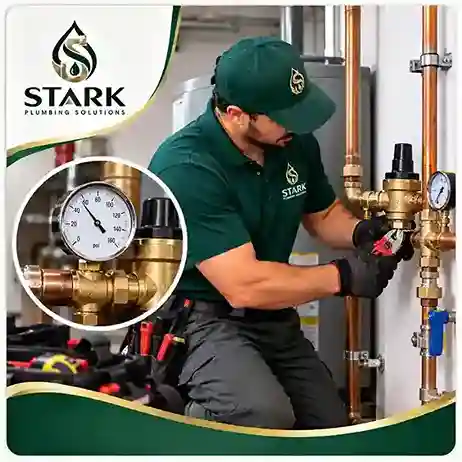
- Pressure: SAWS pressure can run from about 35 to 175 psi depending on location, and 80 psi is the commonly recommended maximum for homes. The pressure regulator is on the customer side. A failing regulator can let pressure climb and stress the line. Read about pressure regulator replacement.
- Older homes: Houses built from the 1950s into the 1980s may have galvanized steel, old copper or polybutylene lines. Pinholes and corrosion are common at the end of life.
- Trees and roots: Large oaks and pecans seek water and can crush or wrap pipe over time.
- Shifting foundations: Where the pipe enters the house, movement is concentrated, so entry-point leaks are common.
Whole-neighborhood patterns exist, too. Some older areas near downtown, Southtown and King William have older pipe, and newer areas on the northwest side have newer materials and higher-pressure zones. Wherever you are, a pressure gauge reading at an outdoor spigot is a quick, cheap check.
Seasonal Water Line Care in San Antonio
San Antonio's water lines face freeze events in winter, heavy demand and soil shrinkage in summer, and weather swings in spring and fall. A little planning each season reduces the odds of a surprise.
Winter
The February 2021 winter storm showed how many San Antonio homes have shallow, exposed or poorly insulated pipe and unknown shut-off locations. Know your main valve, insulate exposed pipe and hose bibs, and see frozen pipe repair if something does freeze.
Summer
Heat, irrigation and drought dry the clay, shrink the soil and can shift pipe and fittings. A bill spike may be irrigation, not a leak, but verify with the meter test. Check outdoor lines and the outdoor faucets.
Spring
After the cold season, test the main valve, look for new soft spots, check pressure and have anything odd inspected before the irrigation season starts.
Fall
Fall is a good time for planned replacements. Ground is workable, schedules are calmer and you are ahead of the first freeze. Insulate and label shut-offs before the cold.
Rain after a dry spell can also reveal leaks that were hidden by dry soil. If a patch of lawn is suddenly lusher or wetter than the rest, check the meter.
Checklists: Before We Arrive and Questions to Ask Any Plumber
Before we arrive
Tick these off. They save time and help us give you a better first estimate.
· Tip: screenshot this list.
Questions to ask any plumber before hiring
· Tip: screenshot this list.
Why You Should Not DIY a Water Line Repair
Digging up and repairing a buried water line yourself risks striking gas or electric lines, flooding, contaminating your water and creating code and insurance problems. A small leak can become an expensive one quickly.
- Utility strikes: Hitting a gas, electric, cable or fiber line is dangerous and costly. Texas requires contacting Texas811 at least two working days before digging, and marking is free for utilities it covers. Private lines, like irrigation or yard lights, may not be marked.
- Flooding and sinkholes: A cut or loosened pipe under pressure can wash out soil and flood a house.
- Contamination: An open line can draw in dirt and bacteria. Proper flushing and, where required, disinfection matter. Hoses and cross-connections can also pull water the wrong way, see backflow testing.
- Wrong materials: Fittings and pipe not rated for buried or pressurized use fail later.
- Permits and code: Plumbing work is licensed work in Texas, and permits are typically required.
- No pressure test: A hidden leak at a fresh joint can run for months.
- Insurance and resale: Unpermitted or unlicensed work can cause trouble with claims, inspections and selling.
If you are comfortable closing a valve, taking photos and calling for help, you are doing the right DIY part. Leave the digging, cutting and tying-in to a licensed pro. ☎ (210) 898-9754.
Permits, Utility Locates, Codes and Licensing
Water service line work in San Antonio typically requires a City of San Antonio plumbing permit, utility locates through Texas811, and a licensed Texas plumber. Requirements can vary by scope and property, so we confirm them before work starts.
- Licensing: In Texas, plumbing work is licensed work. Verify any plumber's license at tsbpe.texas.gov and ask for the license number.
- Permits: The City of San Antonio typically requires a plumbing permit for this kind of work. We confirm what applies to your job and who files it.
- Utility locates: Contact Texas811 at least two working days before digging. Holidays do not count. If digging is delayed more than 14 days past the notice, a new notice is needed, per Texas811.
- SAWS: The meter, the tap and anything on the SAWS side go through SAWS. Do not tamper with the meter or box.
- HOA and deed rules: Some HOAs want notice before digging, trenching or touching landscaping. Check yours.
- Right-of-way: Work in the street, sidewalk or alley may need separate approvals.
Need to know more about how we handle permits on your property? Ask when you call.
Our Estimate Process and What to Expect
You get a written estimate before any work begins, you approve it before we start, and if the scope changes we stop and talk first. That is how we aim to avoid surprise add-ons.
- Written estimate first: Scope, materials, method and what is not included are on paper.
- Your approval before work: No work begins without it.
- We stop and talk if scope changes: If we find something new, we explain it and update the estimate.
- Photos welcome: Text photos to (210) 898-9754 for a faster first look.
- Warranty terms: Listed on your written estimate.
- Licensed plumbers: Ask for the license number and verify it at tsbpe.texas.gov.
We will not promise a price over the phone for a line we have not diagnosed, and neither should any plumber. For emergencies, call (210) 898-9754 for emergency help. For a look at our other service lines, see emergency plumber options.
Myths vs. Facts About Water Lines
| Myth | Fact |
|---|---|
| SAWS fixes any leak on my property. | SAWS says it maintains the line from the main to the meter. The property owner generally handles repairs from the meter toward the home. |
| No wet spot means no leak. | Leaks can drain into soil, caliche cracks or under slabs without surfacing. The meter test finds them. |
| A high bill always means a leak. | Irrigation, pool filling, guests and a running toilet cause high bills too. |
| Trenchless always avoids digging. | It usually reduces it, but still needs access pits, and not every site is suited. |
| Higher pressure is better. | Pressure above about 80 psi can stress pipes, fittings and appliances. |
| Homeowners insurance always covers underground lines. | Many policies exclude wear and tear. Check your policy and ask about add-ons. |
| I can dig it myself, it is my pipe. | Digging without Texas811 locates can hit gas or electric lines. |
Water Line Repair FAQs for San Antonio Homeowners
How much does water line repair cost in San Antonio?
Water line repair cost depends on depth, length, surface, material and method, so a firm price needs an on-site diagnosis. General industry ranges run from a few hundred dollars for diagnosis and simple repairs to thousands for full replacement or new installation. Those are not a Stark quote. We give a written estimate before any work, and you approve it before we start.
Why is water pooling in my yard?
Water pooling in your yard with no rain or sprinkler run often means a leaking underground water pipe, though irrigation, a hose bib or a sewer issue can look similar. A wet spot between the meter and house that stays damp for days is a classic sign. Do the meter test with all water off. If the meter moves, call us at (210) 898-9754 to pinpoint the leak.
Who repairs an underground water service line?
A licensed plumber repairs the underground water service line on the customer side of the meter. In San Antonio, SAWS says it maintains the line from the main to the meter, and property owners generally handle repairs from the meter toward the home. Check a plumber's license at tsbpe.texas.gov and call SAWS at 210-704-SAWS (7297) if the leak looks like it is on its side.
Can a water line be replaced without disturbing the entire yard?
Often yes, because trenchless methods like pipe bursting and directional boring can replace a line through a few small access pits. It depends on the route, depth, soil, nearby utilities and pipe condition, and caliche or rock can limit options. We inspect first, explain which methods could fit your lot, and do not promise one method or landscaping restoration unless your estimate says so.
How do I know if my water line is leaking underground?
Turn off all water, then watch your meter flow or leak indicator for 15 to 30 minutes. If it keeps moving, water is leaking somewhere. Close your house main valve. If the meter stops, the leak is inside your house. If it keeps moving, the leak is between the main valve and the meter. Wet yard spots and low pressure support the finding.
Where is my main water shut-off valve?
Your main shut-off valve is usually where the water line enters the house, such as a front wall, garage or utility closet, and some meters also have a valve in the meter box. Find it before an emergency and practice closing it. If it will not turn fully or leaks, ask a plumber to replace it. Do not force a stuck valve.
Is a leak between the meter and my house my responsibility?
Generally yes. SAWS says it maintains the line from the main to the meter, and the homeowner handles repairs from the meter toward the home. Some properties have shared or unusual setups, so confirm with SAWS at 210-704-SAWS (7297). If you are unsure, do the meter test and call us with the result.
Will SAWS give me a credit on my bill if I had a leak?
SAWS says it can review your account for a possible leak adjustment after you submit repair receipts, but terms change and we cannot promise a credit. Fix the leak promptly, keep the invoice and photos, and ask SAWS about current eligibility at saws.org or 210-704-SAWS (7297).
Do I need a permit to replace a water line in San Antonio?
The City of San Antonio typically requires a plumbing permit for water service line work, and Texas811 locates are needed before digging. Requirements depend on the scope, so we confirm what applies to your job and who files it. Be wary of anyone who skips permits or locates.
How long does a water line replacement take?
Many residential water line jobs take about a day, though length, depth, soil, concrete or driveways, permits and utility locates can extend that. Texas811 asks for at least two working days notice before digging, so planned work needs lead time. We give a time frame on your written estimate and update you if conditions change.
What is the best pipe for a water service line?
No single pipe is best for every site, because copper, PEX, polyethylene and other approved materials each have trade-offs in cost, flexibility, durability and code approval. We recommend a material after inspecting your line, the soil and your plans, and we explain the reasons in writing. Old galvanized and polybutylene lines are usually replaced when found.
Does homeowners insurance cover a broken water line?
It depends on your policy. Many homeowners policies exclude wear and tear for underground lines, while some offer service-line add-ons or cover sudden damage. Check your policy and ask your agent before work starts. We provide a detailed invoice and photos that may help with a claim.
Should I call SAWS or a plumber first for a water leak?
Call SAWS at 210-704-SAWS (7297) first if the water is at or before the meter or the whole street has low pressure. Call a licensed plumber first if water is after the meter, in your yard or inside your home. If you are not sure, text us photos at (210) 898-9754 and we will help sort it out.
Can low pressure be caused by a water line problem?
Yes. A leak, a partly closed valve, internal corrosion in old pipe or a failing pressure regulator can all cause low or uneven pressure. If neighbors are also affected, it may be a SAWS system issue. We test pressure and flow to find out which. Our water pressure repair page covers related causes.
About This Page and Our Sources
Sources and further reading:
- SAWS: Don't Get Soaked by a High Bill — ownership split, leak checks, repair receipts
- SAWS: Reading Your Water Meter — electronic meter display and flow rate
- SAWS: High Water Bill Caused by a Leak? — leak adjustments and Plumbers to People
- Texas811 FAQ — two working days notice, 14-day rule
- Texas State Board of Plumbing Examiners — verify a plumber's license
- City of San Antonio Development Services — permit requirements
- U.S. EPA: Drinking Water — general drinking water information
- San Antonio Water System — customer service 210-704-SAWS (7297)
Costs, timelines and code requirements vary by home, equipment and the City of San Antonio permit rules in effect at the time of the work. Nothing on this page replaces an on-site inspection by a licensed plumber. Stark Plumbing Solutions is not affiliated with SAWS, CPS Energy or any manufacturer named on this page.